Trumpo ginklų magijos šou – tai dūmų ir veidrodžių meistriškumo pamoka

2025 m. liepos 15 d.
Šiandien Trumpas pagaliau „sužavėjo“ pasaulį savo didingu pranešimu apie baudžiamąsias priemones Rusijai.
Kaip įprasta, šis pranešimas daugumai žmonių sukėlė nuobodulį ir apatiją, o Rusijos rinkos džiaugsmingai šoktelėjo beveik 3 %. Tačiau panagrinėkime, ar Trumpo bauginančios grėsmės iš tiesų yra tokios rimtos, kaip žmonės mano.
Pirma, laikas: Axios dabar praneša, kad Putinas tariamai pasakė Trumpui, jog planuoja „sustiprinti“ Rusijos vasaros ofensyvą per artimiausius 60 dienų, siekdamas, pasak kai kurių šaltinių, užimti likusią nominaliai Rusijai priklausančią teritoriją, t. y. Donecko, Luhansko ir Zaporožės sritis.
Axios: Pasak Trumpo, Putinas jam esą pasakė apie planus per artimiausius 60 dienų sustiprinti puolimą Ukrainoje.
Trumpas pasidalijo pokalbio su Rusijos vadovu detalėmis su savo Prancūzijos kolega Macronu, pridurdamas: „Jis nori viską paimti.“
Pasak leidinio, būtent po šio pokalbio Trumpas kritikavo Putiną ir pažadėjo padidinti ginklų tiekimą Ukrainai.
Jei tokiose žinutėse yra bent kruopelė tiesos, tuomet Trumpo „50 dienų įspėjimas“ atitiktų Putino planą, nes pokalbis įvyko prieš keletą dienų, taigi Putino „60 dienų planas“ beveik tiksliai sutaptų su Trumpo nustatytu terminu.
Pagrindinis to aiškinimas galėtų būti toks, kad Trumpas duoda Rusijai du mėnesius užimti visą teritoriją, kurią ji laiko savo, o tada bus „sumažintas kirvis“.
Dabar, kaip visada, didžiausia neaiškumo dėmė yra ginklų srityje. Niekas tiksliai nežino, kokie ginklai ir iš kokio paketo bus siunčiami, bet pagal CNN, viskas skamba taip pat, tik „perpaketuota“ su nauja kaina.
Pranešimai rodo, kad bus siunčiami tie patys oro-oro raketos, haubicos ir GMLRS šaudmenys kaip ir anksčiau, tik dabar sąskaitą apmokės NATO šalys. Anksčiau, pagal Bideno PDA, JAV siuntė ginklus tiesiogiai į Ukrainą iš savo atsargų, o tada tas atsargas papildydavo naujais užsakymais MIC iš mokesčių mokėtojų lėšų. Dabar tai bus daroma iš Europos mokesčių mokėtojų lėšų – turime pripažinti, kad tai yra laimėjimas JAV.
Tačiau didžiausias dėmesys buvo skirtas „Patriot“ sistemoms. Vėlgi, viskas yra miglota – niekas tiksliai nežino, ką reiškia skaičiai: „Patriot“ paleidimo įrenginiai, baterijos, batalionai ir pan. Trumpas kartą paminėjo žodį „baterijos“, tačiau aptariami skaičiai neatrodo realistiški. Pavyzdžiui, jis minėjo, kad į Ukrainą bus nusiųsta „17“, bet JAV pati turi tik apie 50–70 aktyvių baterijų, ir akivaizdu, kad nusiųsti trečdalį visų „Patriot“ atsargų yra mažai tikėtina.
Kai tikrai skaitai tarp eilučių, Trumpas atrodė užsiminęs, kad galutinis tikslas yra surinkti didesnį „sistemų“ kiekį Ukrainai, bet „iš pradžių“ bus nusiųsta tik nedidelė dalis. Tai vienas iš nedaugelio komentatorių, kuris suprato dviprasmiško „pranešimo“ niuansus:
Prisiminkite, kad Rubio neseniai užsiminė, kad JAV neturi daugiau „Patriot“ raketų, kurias galėtų duoti, kaip parodžiau keliuose ankstesniuose atnaujinimuose. Jis paragino Europą duoti savo „Patriot“ raketas, bet, kokia staigmena, naujoje FT straipsnyje Vokietijos gynybos ministras Pistorius prisipažino, kad Vokietija nesiųs nei „Patriot“, nei „Taurus“ raketų:
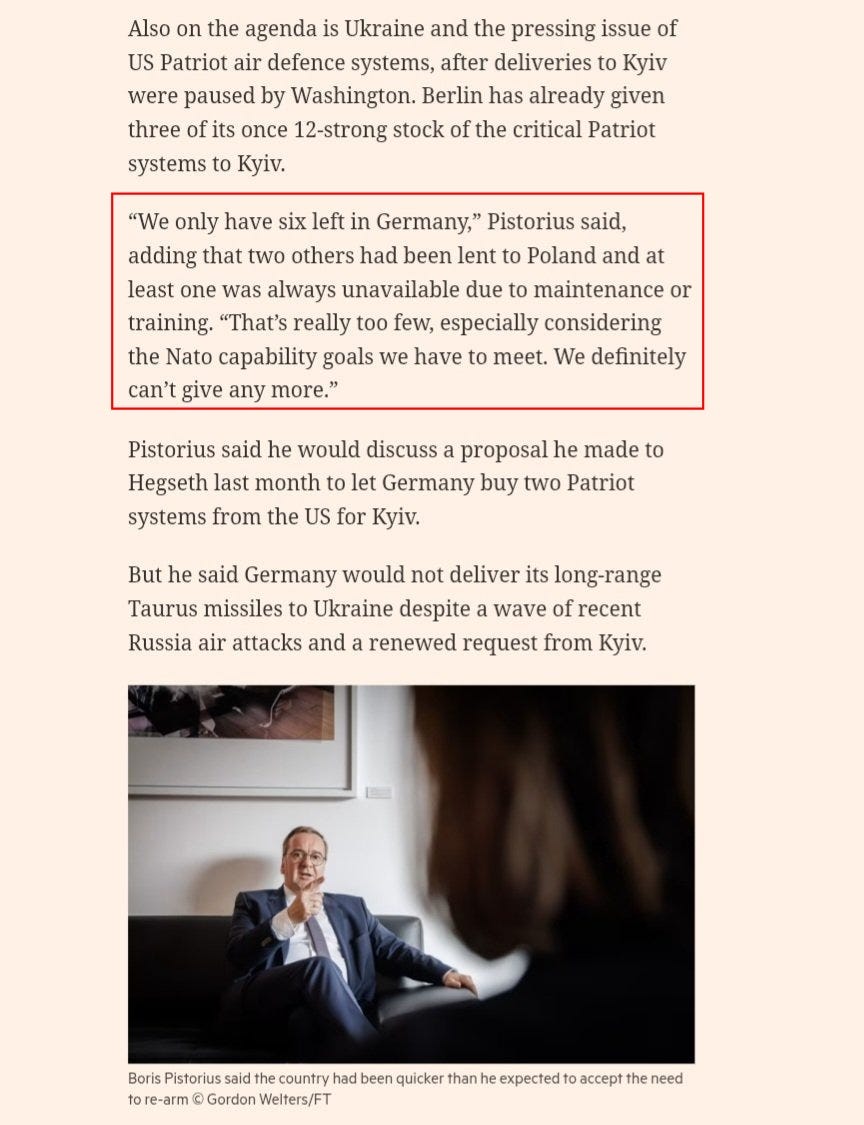
Kaip matyti iš aukščiau pateikto teksto, jis toliau teigia, kad Vokietija galėtų įsigyti dvi sistemas iš JAV ir perduoti jas Ukrainai. Tai yra savotiškas vaikiškas žaidimas, kurio tikrasis tikslas – sustiprinti viešųjų ryšių naratyvą, kad Ukraina yra „remiama“, siekiant išlaikyti viltį, kad Ukrainos ginkluotosios pajėgos nesugriūtų dėl demoralizacijos.
Vokietijos gynybos ministras Pistorius agentūrai „Reuters“:
Sprendimas dėl dviejų „Patriot“ sistemų Ukrainai bus priimtas per kelias dienas ar savaites, tačiau pirmoji sistema bus pristatyta tik po kelių mėnesių.
Trumpai tariant: tai tik daug triukšmo, siekiant vėl atidėti sprendimą, perpakavus tą pačią politiką su nauja fanfarų palyda.
Sankcijų grėsmė taip pat buvo dviprasmiška. Trumpas jas vadino „muitais Rusijai“, bet iš tiesų tai yra tik muitai JAV sąjungininkams:

Rusija į JAV eksportuoja praktiškai nieką, kam galėtų būti taikomi „muitai“. Ši grėsmė yra beprasmė, nes kitos didžiosios valstybės nesitaikys su Trumpo grasinimais, privers jį paskutinę akimirką pasitraukti, kaip įprasta, ir tada paskelbti „pergalę“, sudarius kokį nors antraeilių figų lapų „susitarimą“.
Apibendrinant: visa ši komedija atrodo kaip gudrus, bet puikus Trumpo žongliravimas, kuriuo jis dar kartą sudaro įspūdį, kad imasi rimtų „veiksmų“ prieš Rusiją, siekdamas nutildyti kritikus ir nuraminti neokonservatorius, o iš tikrųjų beveik nieko nedaro, kad padėtų Ukrainai karo veiksmuose, išskyrus tai, kad grąžina ankstesnį status quo į gyvybės palaikymo režimą. Šis veiksmas skirtas žaisti abiem pusėmis, sumažinti spaudimą sau, tuo pačiu pernelyg nerizikuojant santykiais su Putinu, tikintis, kad vis dar galima pasiekti didelį Nobelio premiją užtikrinantį paliaubas.
Pažymėtina, kad diskusijose nebuvo aptarti tokie aukščiausios klasės ginklai kaip JASSM raketos, priešingai nei dieną prieš tai buvo prognozavę optimistiškai nusiteikę komentatoriai. Taip pat minėtame FT straipsnyje Pistorius dar kartą kategoriškai atmetė – jau nebežinau, kiek kartą – galimybę siųsti Taurus raketas į Ukrainą:

Taigi, kas mums lieka? Iš esmės, Bideno PDA status quo atnaujinimas su neaiškiu nauju pažadu dėl „keleto“ Patriot raketų paleidimo, kuris yra labiau preliminarus raginimas ieškoti galimų atsargų tarp sąjungininkų.
Paklaustas, kas atsitiks po 50 dienų, jei Putinas atsisakys pasitraukti, Trumpas žurnalistui atsakė: „Neklauskite man šio klausimo.“
Didesnė diskusija vyksta dėl to, ar Trumpas dabar oficialiai prisiėmė atsakomybę už karą, nepaisant silpnų bandymų savo nuolatinius nesėkmius suversti Bidenui; daugelis taip mano. Tačiau aš vis dar įtariu, kad Trumpas stengiasi iš visų jėgų vaidinti griežtą ir nekantrų viršininką, kad savo giluminės valstybės auditorijai parodytų „kietumą“ Putino atžvilgiu, tuo pačiu iš tikrųjų bandydamas sušvelninti žalą JAV ir Rusijos santykiams.
Pavyzdžiui, „aukšti pareigūnai“ prieš dvi dienas „FT“ sakė, kad Trumpas vis dar laiko Zelenski pagrindine kliūtimi taikai:
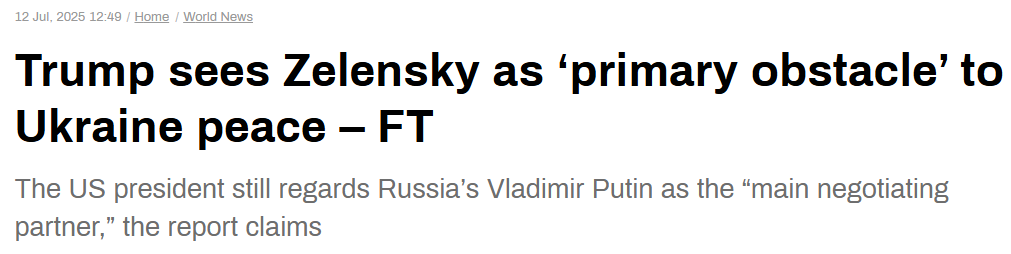
That would likely make his ‘anger’ at Putin a put-on.
—
Intermezzo:
Ex-Russian prime minister Sergei Stepashin has a stark message for Germany, amidst all the militarization threats:
Moscow ‘knows location’ of German missile plants as Merz plans to hand Zelensky the bombs to hit ‘center of Russia’ — ex-PM Stepashin

Given that all the Trump-Ukraine weapons antics are merely an attempt to front-run and offlet some steam from the Russian summer offensives, let us now turn to frontline news:
Starting in western Zaporozhye Russian forces took over the remainder of Kamyanske:

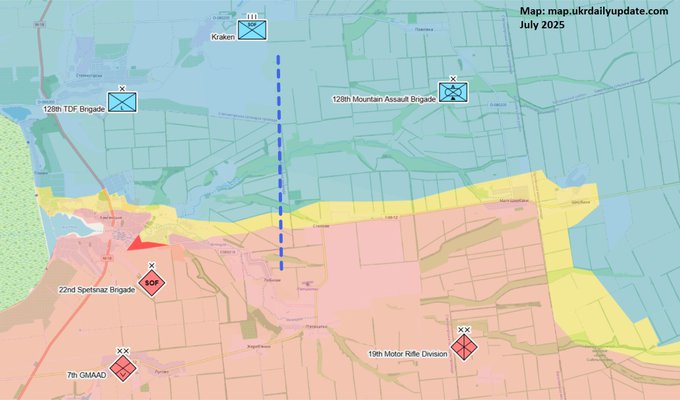
East of there, Russian forces liberated ‘Myrne’, a settlement whose Russian name is Karl Marx:
Mercenaries thought they were going on safari, but it turned out to be a war: how the Russian army liberated the settlement of Karl Marx
➖A scout with the call sign „Husky” spoke about the liberation of the settlement of Karl Marx in the DPR:
▪️ What role do „birds” play in assault operations – 00:11
▪️ How foreign mercenaries were captured – 00:30
This settlement is just to the west of Gulyaipole:
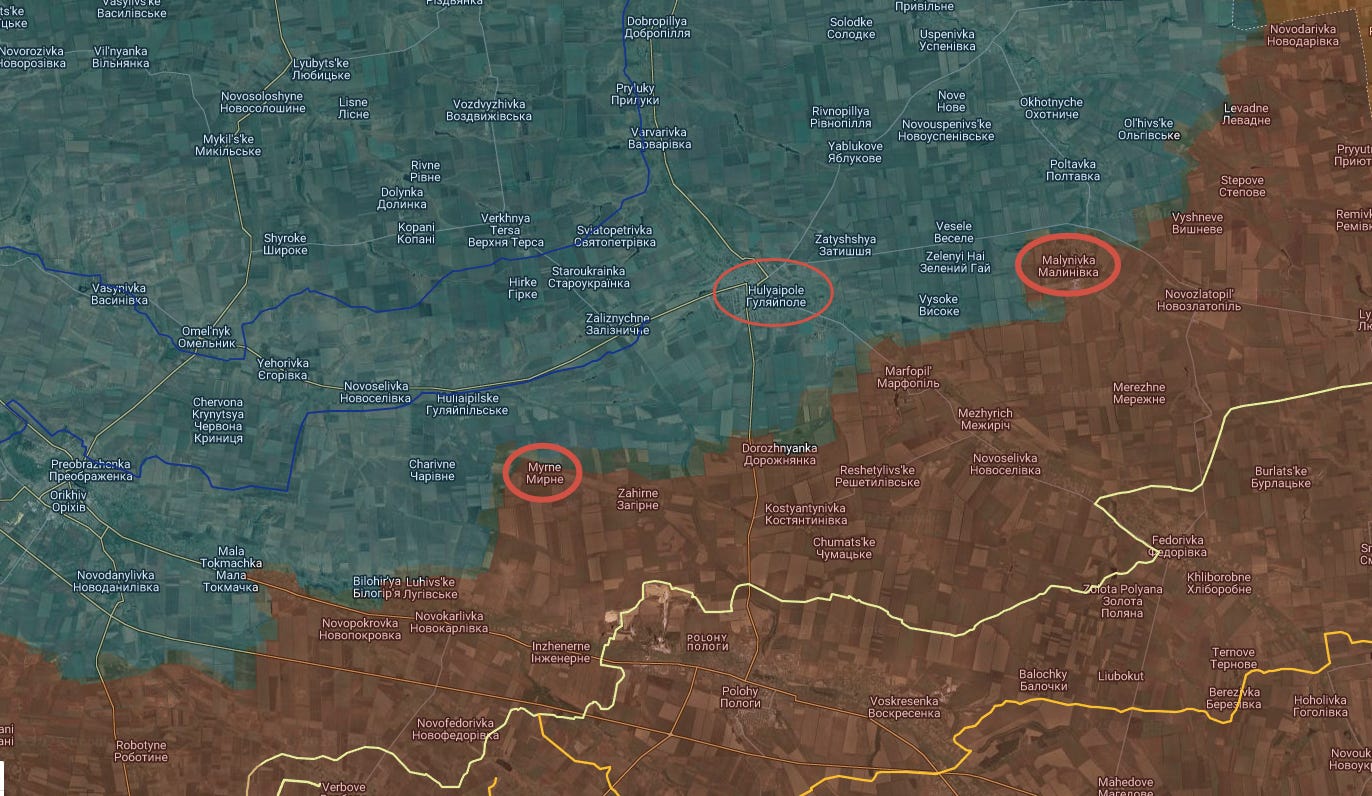
And to the east of it, you can see Malinovka, whose complete liberation by Russian forces was also just announced:
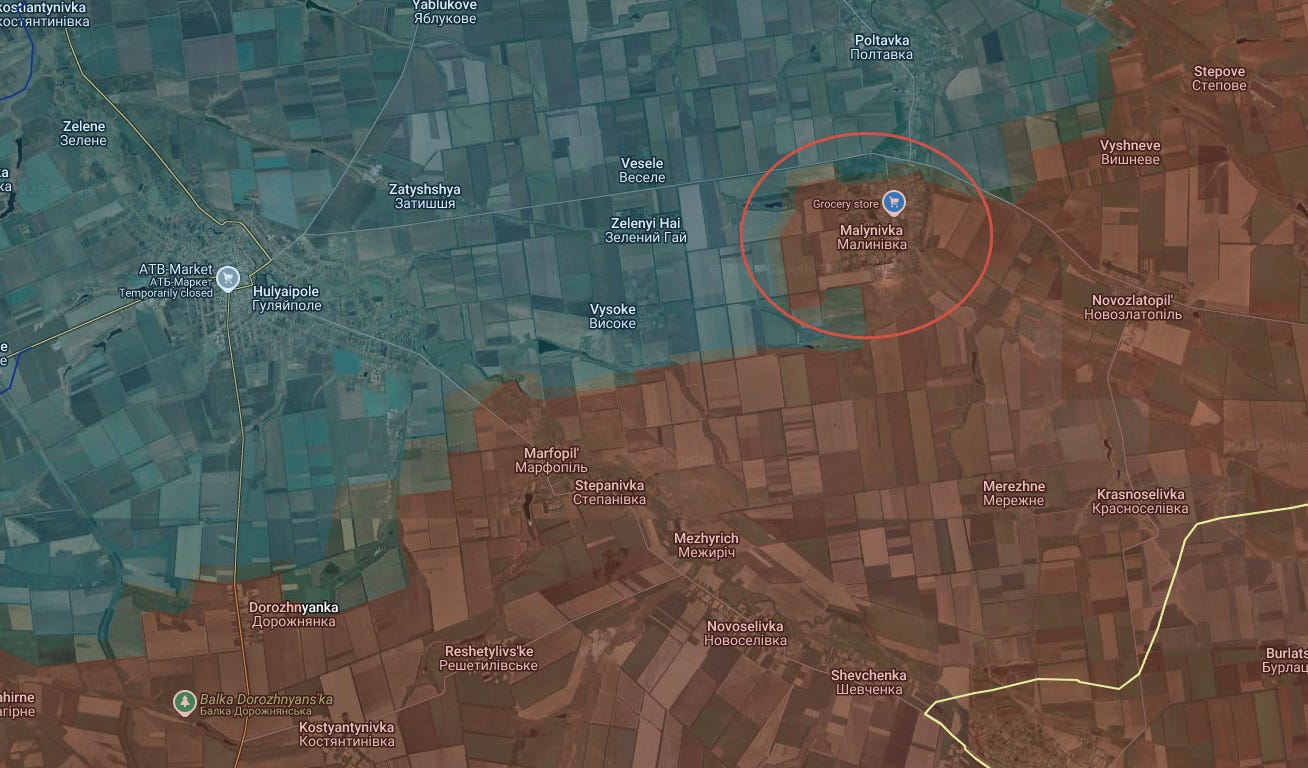
The 1466th Motor Rifle Regiment and the 3rd Battalion of the 114th Motor Rifle Regiment, operating under Task Force „Vostok,” have liberated the village of Malinovka in the Zaporozhye direction.
The battle for Malinovka was long, bloody, and exhausting. Both sides suffered heavy casualties in the fierce fighting. But in the end, the Russian flag was raised over the village.
Having secured this foothold, Task Force „Vostok” is now regrouping and preparing for the next move.
Further northeast on the Velyka Novosilka line, you’ll recall Russian forces had recently captured Poddubne. Now they have expanded north to capture Tolstoi and some of Novokhatske:

Some sources claim Novokhatske is already taken and they’ve even moved farther to Zeleni Hai, as follows:
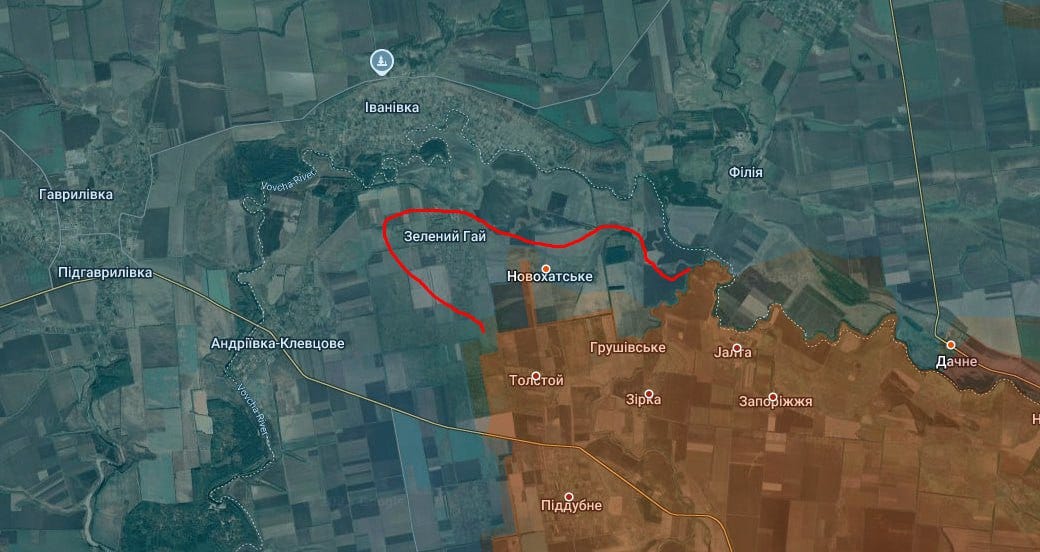
But there’s no official confirmation yet and we won’t jump the gun.
The most talked about direction has been the Pokrovsk-Mirnograd agglomeration, where Russian forces made a critical breakthrough according to some reports:
⚡️Russian troops broke through four kilometers in the Pokrovsk direction and took control of the sludge ponds of the Mirnogradskaya Central Processing Plant, the Telegram channel Slivochny Kapriz reports, citing georeferences.
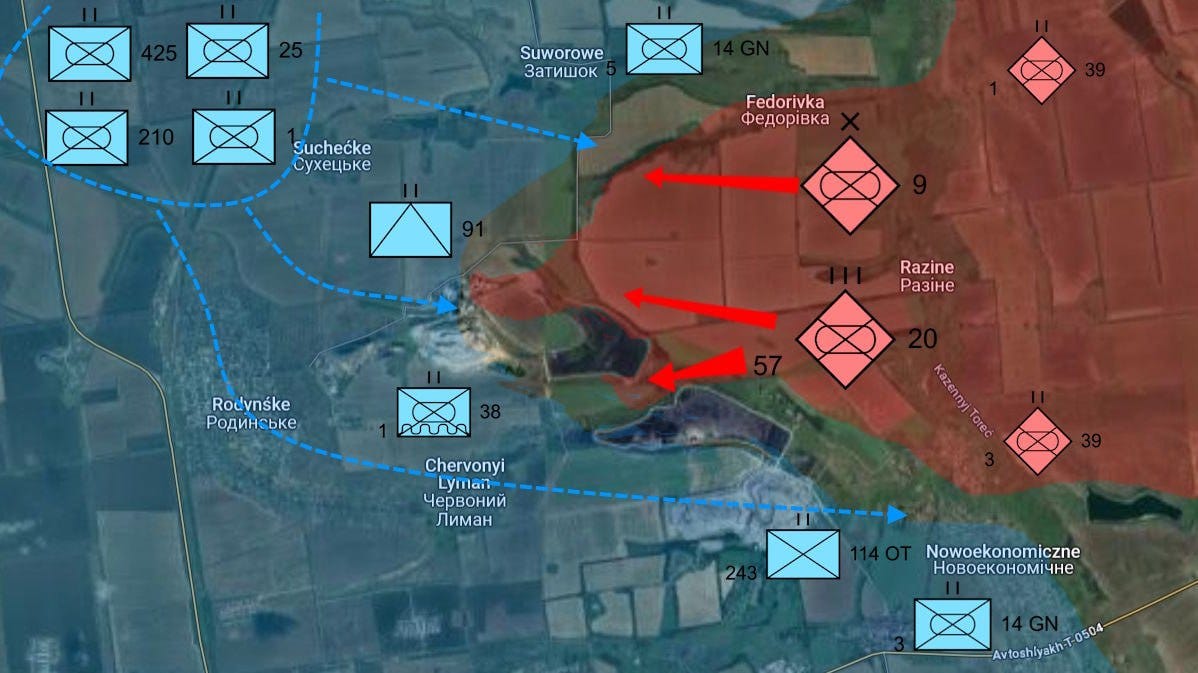
The below shows geolocated footage of Russian forces advancing past Razine toward Rodinske:
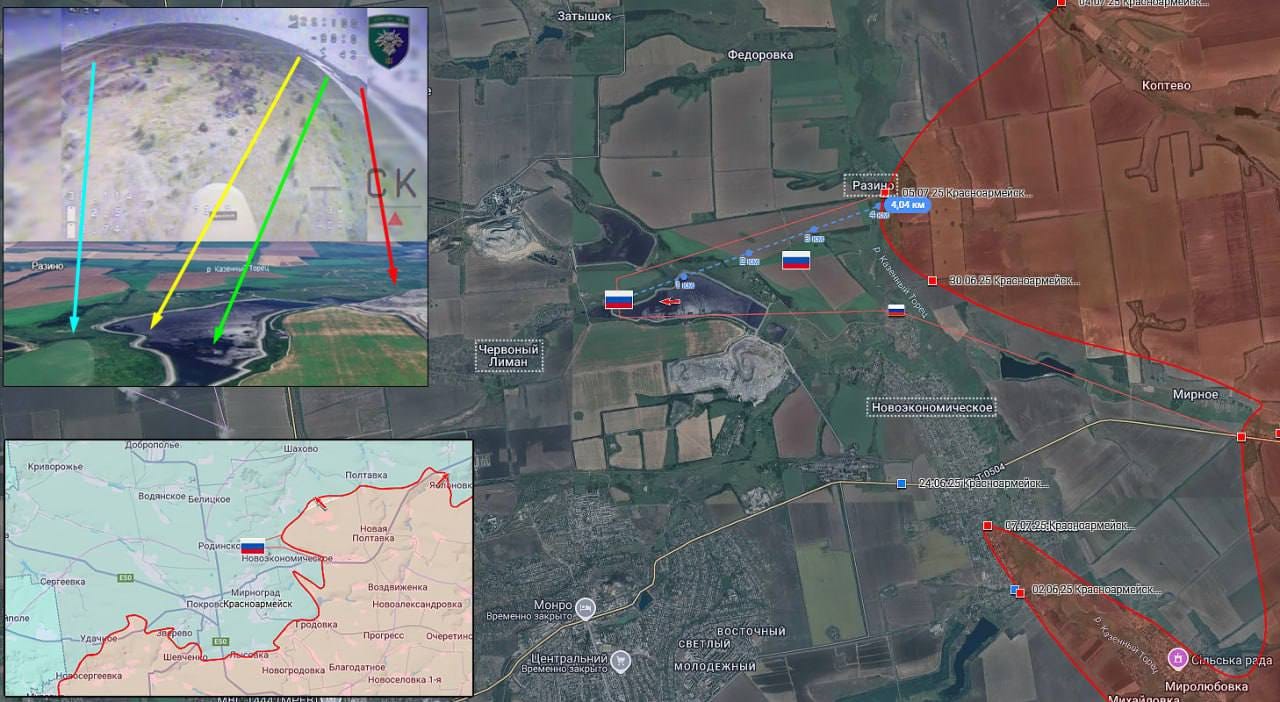
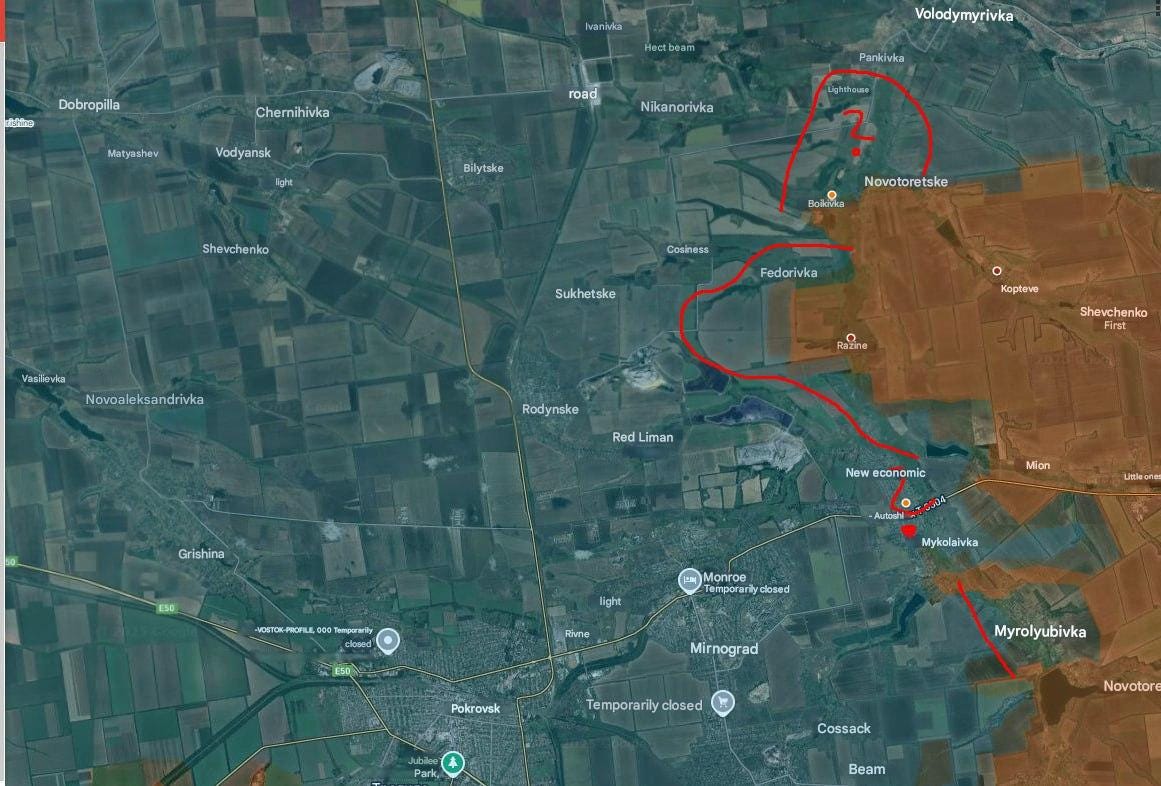
The reason this is particularly important is that it would put Russian forces in striking distance of one of the last remaining supply arteries to the entire agglomeration.
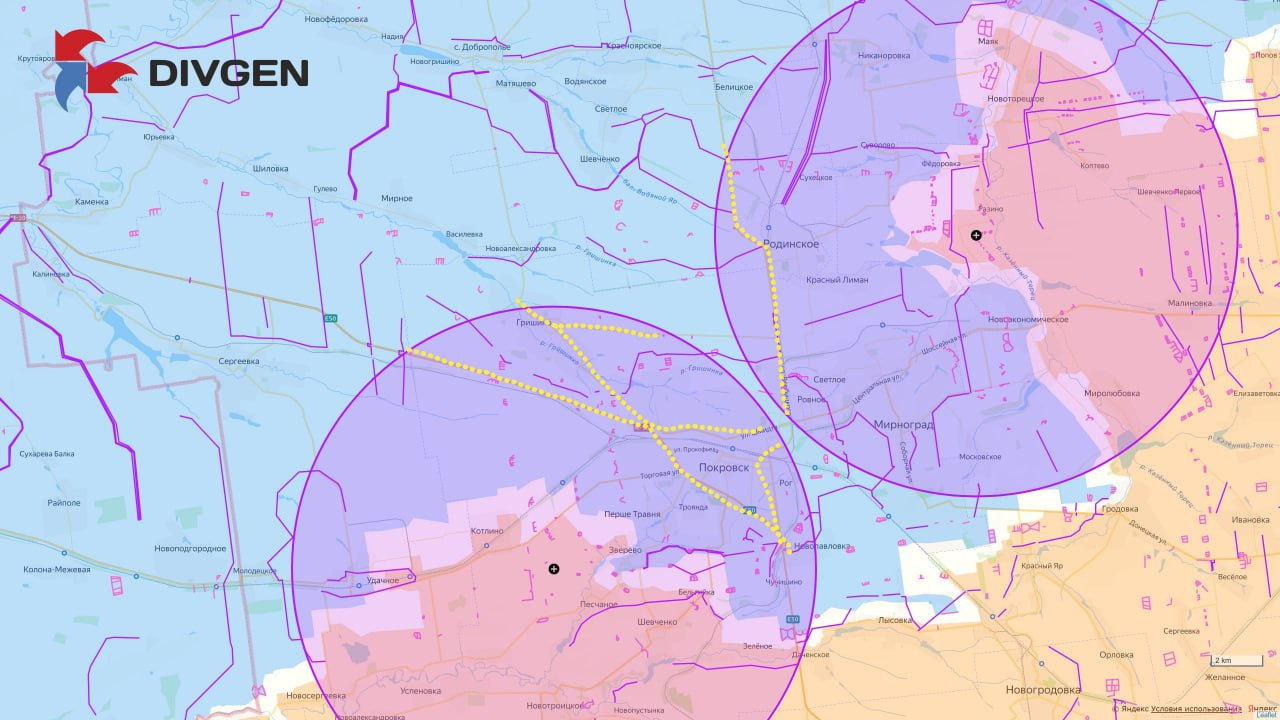
Here’s a better view and explanation. Below, the yellow circles show one of two main supply routes feeding this entire gigantic fortress-agglomeration that includes both Pokrovsk and Mirnograd:

If Russian forces obtain fire control of the yellow route, the vast supply chain for the agglomeration falls onto the last route in the red circle. That means this entire area’s logistics will become compressed into a single route which will put it under tremendous strain, particularly as Russian forces get closer to this last route and eventually put it too under fire control.
Another report:
DivGen reports that all supply roads going into the Pokrovsk – Mirnograd agglomeration are now within 🇷🇺FPV drone range
In short, Ukrainian losses in this area’s rear stand to go through the roof.
More detailed report:
According to available data, initial information about the breakthrough of the defense line of the Armed Forces of Ukraine in the Rodinsky area is confirmed.
The front in the northeast of Pokrovsk collapsed in the area of responsibility of the 14th Operational Brigade of the National Guard of Ukraine, which, according to operational data, actually lost the ability to organize defense. The depth of the breakthrough of the Russian Federation, presumably, reached 5 km, the advanced units of the Russian 9th Motorized Rifle Brigade and the 57th Motorized Rifle Regiment have already reached the eastern outskirts of Rodinsky, from where no more than 4 km remains to the city center.
The breakthrough, judging by some reports, became possible due to the poor adaptation of the terrain to defense. The section between Razino and Fedorovka is open fields. The Russian tactics have remained the same: reconnaissance identifies vulnerable areas, after which assault groups numerically outnumber the defenders are brought in. Due to this, a local advantage is created, which the Armed Forces of Ukraine cannot compensate.
The Ukrainian command made an attempt to stabilize the front by maneuvering reserves: units of at least four different assault units were urgently transferred there, one of which was brought in from the Kherson direction, and the second from the Sumy direction. This corresponds to the actions according to the Sumy scenario, where the reserves worked as a fire brigade, but in this case the effect could not be achieved.
There were some other advances but we’ll leave it at these main ones for now.
—
Let’s cover a few last disparate items:
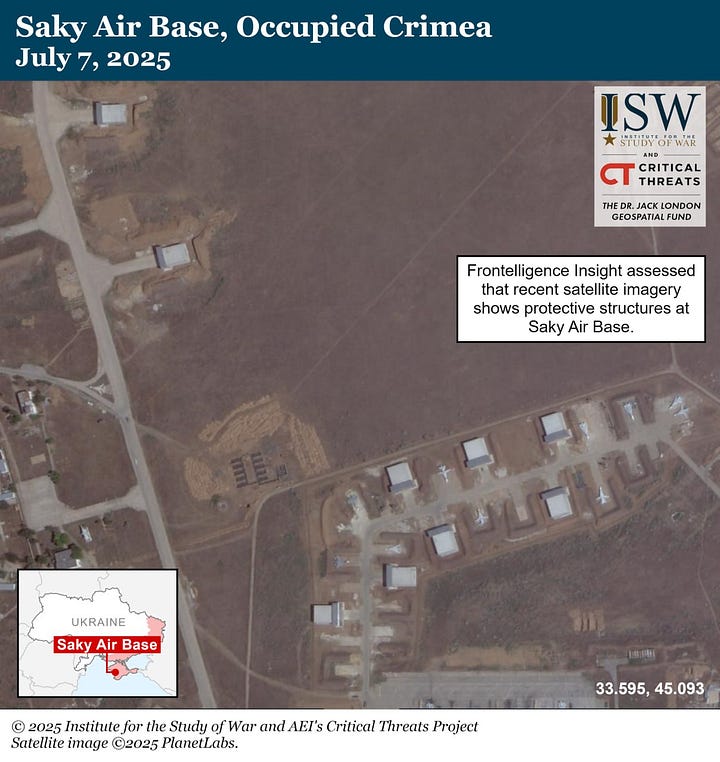
In the spirit of ‘better late than never’, more aircraft shelters are going up in Russian airbases according to new satellite images:
Images of aircraft shelters at the Khalino airfield in the Kursk region and Saki in Crimea, published by the British Institute for the Study of War (ISW).
British „analysts” write that this construction is linked to the success of the Ukrainian operation „Spiderweb”, however, in reality, the construction of shelters for aviation at many Russian airfields began last autumn.
Military Informant
—
One other note on Trump’s sanctimonious condemnations of Russia. In a historic case of hypocrisy, he presumes to accuse Putin of double dealing by ‘talking nice’ then abruptly bombing Ukraine:
Pot, meet kettle.
Trump is speaking into a mirror. This is literally what he himself did to Iran, his administration openly boasting about the ‘ruse’ to lull Iran with ‘talks’ before launching a criminal attack on it.
That’s not to mention his attack was essentially a nuclear one: provided Iran’s nuclear materials were present at the site, and given the site’s proximity to Tehran, one could venture to accuse Trump of attempting a nuclear genocide of civilians.
The hubris of exceptionalism is boundless.
—
Speaking of Iran, newly leaked images from the ground have revealed Iran’s strikes on the US Al-Udeid base in Qatar hit the expensive US communications complex there with shocking precision:
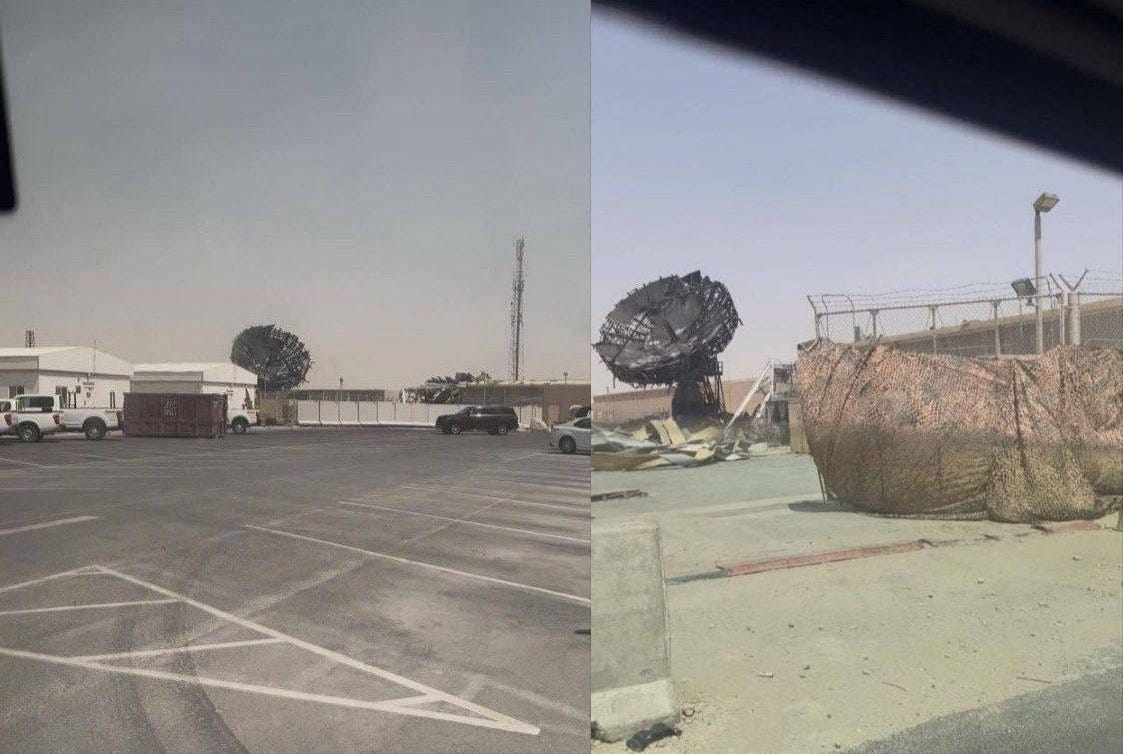
Here’s a “before” photo to match the location:
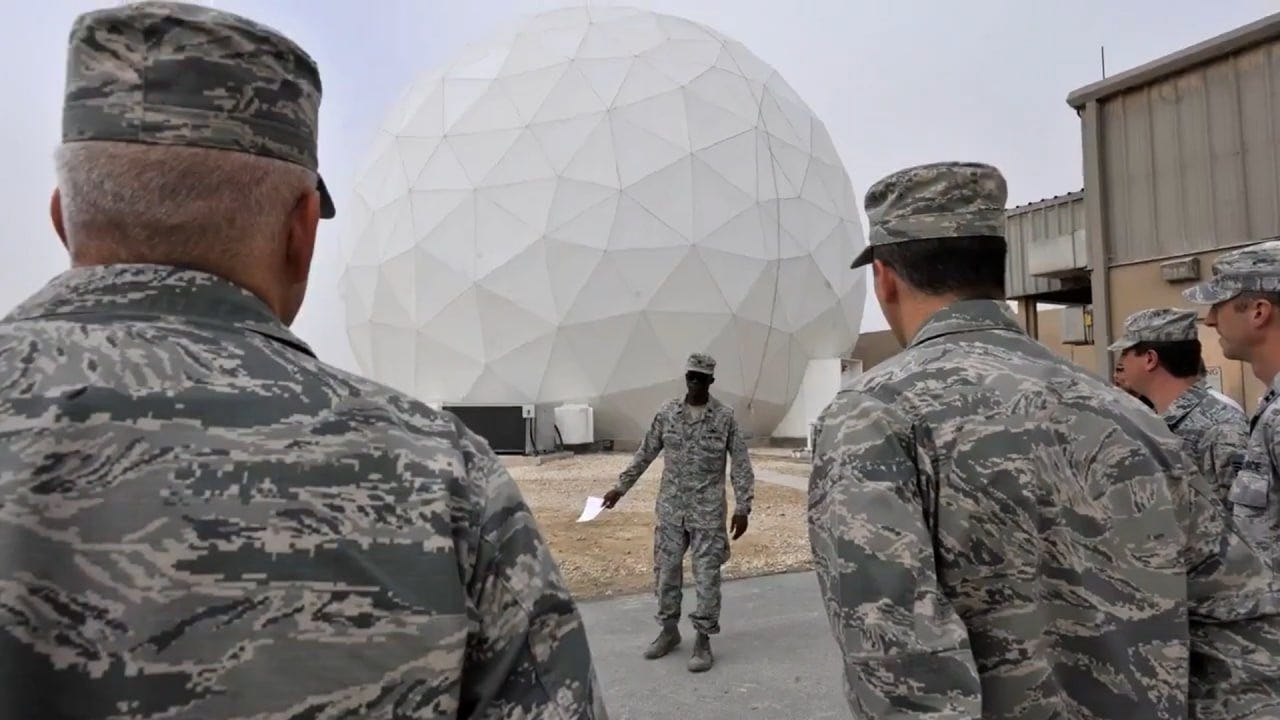
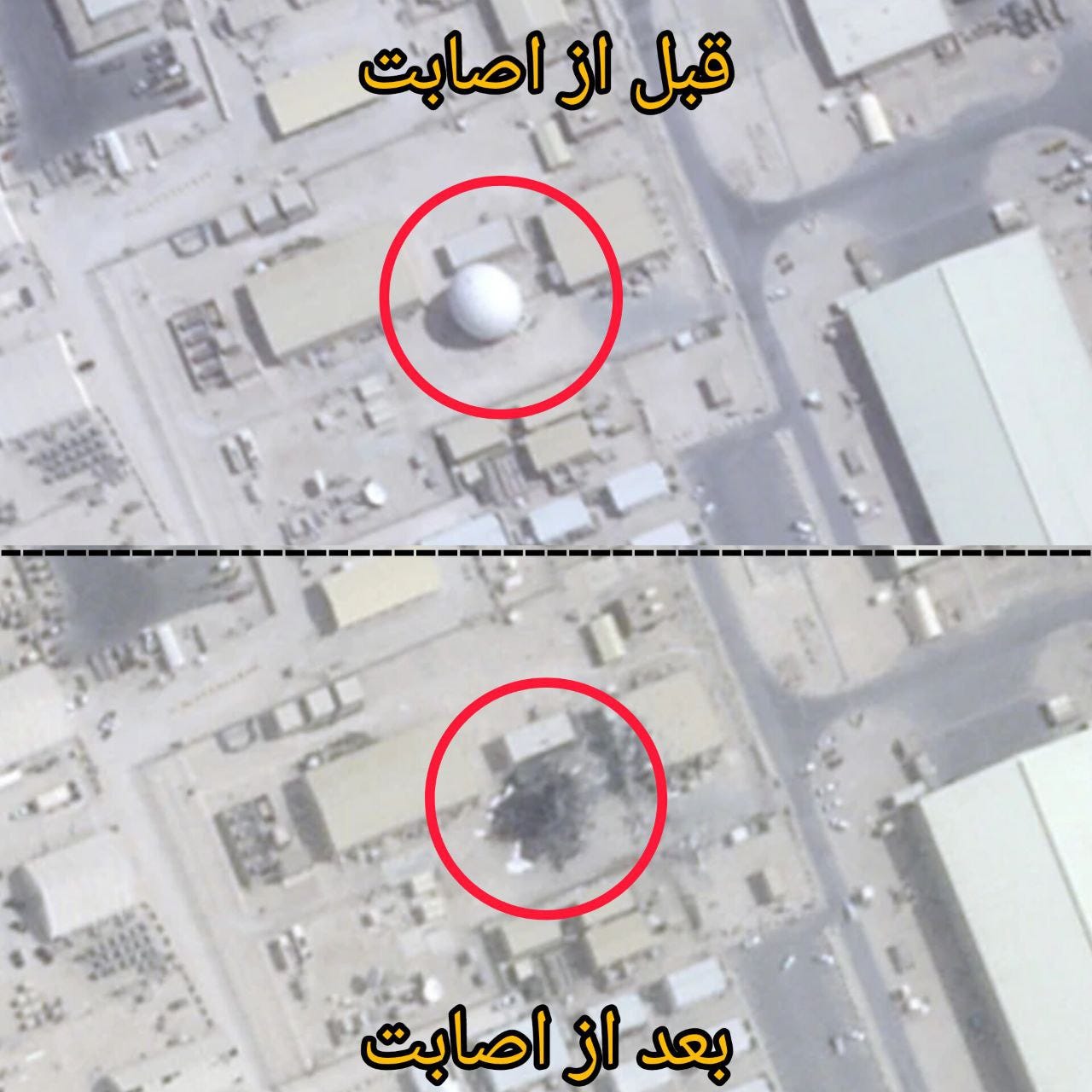
Iran’s June 23 missile strike on the U.S. Al-Udeid Air Base in Qatar destroyed a radar installation. The radar dome was visibly burned, and an adjacent structure sustained damage—contradicting Pentagon claims that all missiles were intercepted and no damage occurred.
New images also reveal the destruction of the U.S. military’s “Modernized Enterprise Terminal” — a hardened wideband satellite communications system — as a result of the IRGC Aerospace Force strike.
The target, the now destroyed Modern Entreprise Terminal (MET) was installed at the base in 2016 at a cost of $15 million and provided secure communication capabilities including voice, video and data services, linking service members in the U.S. Central Command area of responsibility with military leaders around the world.
Recall ‘truth’-seeker Trump claimed all missiles were valiantly shot down by the peerless “Patriot” system.
It opens the pandora’s box of questions regarding how accurate the remainder of Iran’s strikes against Israel really were…?
Telegraph pulled the veil on some of the secrets:

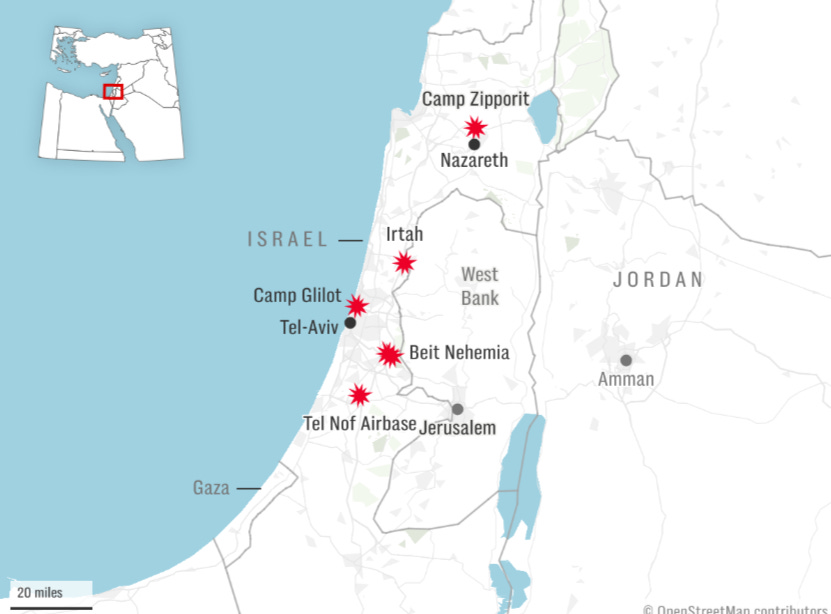
They write:
Iranian missiles appear to have directly hit five Israeli military facilities during the recent 12-day war, according to radar data seen by The Telegraph.
The strikes have not been made public by the Israeli authorities and cannot be reported from within the country because of strict military censorship laws.
On the other hand, Israel claimed to have destroyed “200 out of 400” Iranian missile launchers:
“Iran had about 400 launchers, and we destroyed more than 200 of them, which caused a bottleneck in their missile operations,” an Israeli military official said on Thursday
They added: “We assessed that Iran had approximately 2,000 to 2,500 ballistic missiles at the beginning of this conflict. However, they were rapidly moving toward a mass-production strategy, which could see their missile stockpile grow to 8,000 or even 20,000 missiles in the next few years.”
But several independent OSINT analyses counting each link-sourced hit actually found somewhere between 20 to 40 destroyed, which would represent 5-10% of Iran’s total:
Someone meticulously counted the number of Iranian missile launchers hit during the war with Israel, based on publicly released Israeli airstrike footage. According to his tally, there were 20 destroyed, 4 damaged, 9 empty or decoy launchers, and 12 repeated clips.
By my own calculations, Israel likely struck around 30–40 launchers in total, though I’m also including a number of stationary or retractable launchers that appear to have been hit at missile bases, based on satellite imagery.
For context, Israel had estimated Iran’s inventory of medium-range ballistic missile launchers at around 400 units, though in my opinion, the actual number could be even higher.

The Telegraph article quotes the IRGC’s deputy commander-in-chief as saying that Iran’s famous underground “missile cities” were not even yet tapped during the brief conflict:
Maj Gen Fazli claimed that underground “cities” of missiles remained untouched in Iran.
“We have not yet opened the doors of even one of our missile cities,” he claimed on Thursday.
“We assess that so far only about 25 to 30 per cent of existing missile capability has been used and, at the same time, the production cycle is powerfully supporting this operational capacity.”
—
New report about Russian drone innovations:
We talked to our sources, who told us that the Russians, based on Geran/Shahed drones, are creating an army of long-distance drone delivery [systems] (so-called queens) with mandatory return.
The principle of operation is simple. The main Geranium drone will carry 2-3 FPVs, and itself will act as a signal delivery and repeater. For example, Geran is sent to the Dnepr Krivoy Rog highway; it throws out FPVs above it, which catch moving equipment/vehicles on the highway.
This is a future mass trend. Now drones carry out logistics only at a distance of 20 kilometers from the LBS, but soon it will be everywhere.
Already Russians are mass-producing Geran-3, which it has become a big problem for the Ukrainian Armed Forces.
The Ukrainian crisis is driving the rapid development of military technology.
On that note, Ukraine’s top radio-electronics and drone expert Serhiy ‘Flash’ Beskrestnov gives an update on Russian drone usage:
Your support is invaluable. If you enjoyed the read, I would greatly appreciate if you subscribed to a monthly/yearly pledge to support my work, so that I may continue providing you with detailed, incisive reports like this one.
Alternatively, you can tip here: buymeacoffee.com/Simplicius